

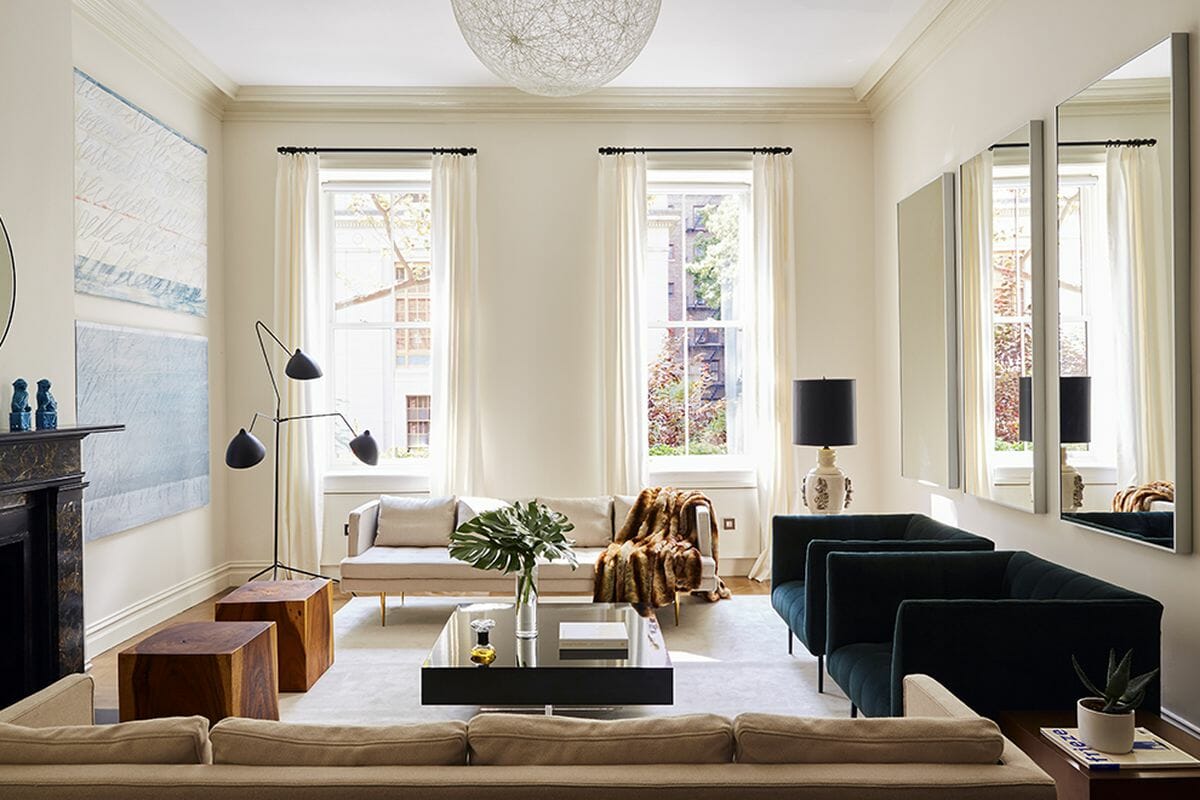
Small living rooms aren’t a design flaw; they’re a design opportunity.
With the right window treatments, a compact space can feel brighter, taller, and far more open than its square footage suggests. Designers rely on a few consistent principles to visually expand a room, and windows are often the first place they start.
If your living room feels tight, crowded, or slightly unfinished, the solution may not be new furniture; it may be smarter window styling.
Here’s how to make a small living room feel noticeably larger.
Table of Contents
Step 1: Hang Curtains Higher Than You Think
One of the oldest designer tricks still works beautifully: mount your curtain rod closer to the ceiling, not directly above the window frame.
When curtains start higher, the eye travels upward. This creates the illusion of taller ceilings and more vertical space. Even raising the rod just 4–8 inches above the trim can make a visible difference. In rooms with lower ceilings, going even higher, a few inches below the ceiling line, enhances the effect.
Step 2: Go Wider to Make Windows Look Larger
Small windows often make a room feel boxed in. The fix? Extend curtain rods 8–12 inches beyond the window frame on each side.
This allows panels to sit mostly outside the glass when open, exposing more natural light and making the window appear wider than it actually is. The added width visually stretches the wall and balances proportions.
Skimpy curtain coverage shrinks a room. Generous width expands it.
Step 3: Let Light Work in Your Favor
Natural light is the most powerful tool for opening up a space.
Heavy, dark fabrics can visually compress a small living room, especially if the space already lacks abundant light. Instead, choose light-filtering materials that soften brightness without blocking it entirely.
If privacy isn’t a major concern, layering with sheer roman shades allows daylight to diffuse gently across the room while maintaining an airy feel. The result is brightness without glare, and brightness is what makes small rooms feel expansive.
The more light you preserve, the larger the space appears.
Step 4: Choose the Right Color Strategy
Color plays a huge role in spatial perception.
Light, neutral tones reflect light and blur hard edges, which softens the room’s boundaries. If your walls are pale, selecting curtains in a similar tone creates visual continuity, and continuity prevents the eye from stopping abruptly at contrast lines.
However, that doesn’t mean avoiding personality. Subtle pattern can actually enhance depth when used thoughtfully. For example, soft patterned curtains in muted tones can add visual interest without overwhelming the room. The key is scale — smaller prints or tone-on-tone designs work best in compact spaces.
If you prefer solid colors, keep contrast low. High-contrast drapery can break the visual flow and make walls feel shorter.
Step 5: Embrace Tailored Structure
While softness is helpful, structure prevents a small room from feeling messy.
Clean, precise window treatments look intentional. Loose, uneven panels make tight quarters feel cluttered. That’s why properly fitted treatments are critical.
Well-proportioned custom curtains provide fullness without bulk. They hang correctly, stack neatly, and frame the window in a way that feels deliberate rather than accidental.
Fit is everything in small rooms.
Step 6: Keep Floor Space Visible
Heavy puddling fabric can feel luxurious in large spaces — but in small living rooms, it can visually weigh down the floor.
Instead, allow curtains to just kiss the floor or hover slightly above it. This keeps lines clean and preserves the sense of openness at ground level.
When the floor is visible, the room feels lighter.
Step 7: Consider Layering for Depth (Without Bulk)
Layering can absolutely work in small spaces, as long as it’s done thoughtfully.
A streamlined base layer, such as an inside-mounted roman shade, keeps the window looking clean and architectural. Adding slim drapery panels on either side introduces softness without overwhelming the frame.
For cooler-toned interiors, gray window roman shades can anchor the window subtly while maintaining a cohesive, airy palette. When paired with neutral outer panels, the look feels layered but not crowded.
Depth adds dimension.
But proportion keeps it breathable.
Step 8: Avoid Overcomplicating the Window
Small rooms benefit from restraint. Avoid:
- Thick valances that cut into visual height
- Heavy swags or overly ornate details
- Excessively dark fabrics
- Panels that are too narrow
Every design decision should support openness.
If your living room already has statement furniture or bold wall art, keep window treatments understated. Let them enhance, not compete.
Step 9: Coordinate with the Rest of the Room
Window treatments should feel integrated, not isolated.
Pull tones from:
- Throw pillows
- Rugs
- Artwork
- Upholstery
Even subtle coordination creates cohesion, and cohesion makes a room feel intentional. In small spaces, especially, visual harmony reduces the sense of clutter.
When everything feels connected, the room feels larger.
Why Windows Matter So Much in Small Spaces
In compact living rooms, walls are limited and furniture footprints are tighter. That means windows become one of the most noticeable design elements.
Done poorly, they shrink the space. Done thoughtfully, they stretch it.
By maximizing height, extending width, preserving light, and choosing tailored proportions, you create visual breathing room without changing the square footage at all.
Bringing It All Together
To make a small living room feel bigger:
- Mount curtain rods higher.
- Extend them wider.
- Choose light-filtering fabrics.
- Keep colors cohesive.
- Ensure proper fullness and fit.
- Avoid visual clutter.
Window styling isn’t just decorative, it shapes how a room feels. And in small spaces, every inch of visual space counts.
