

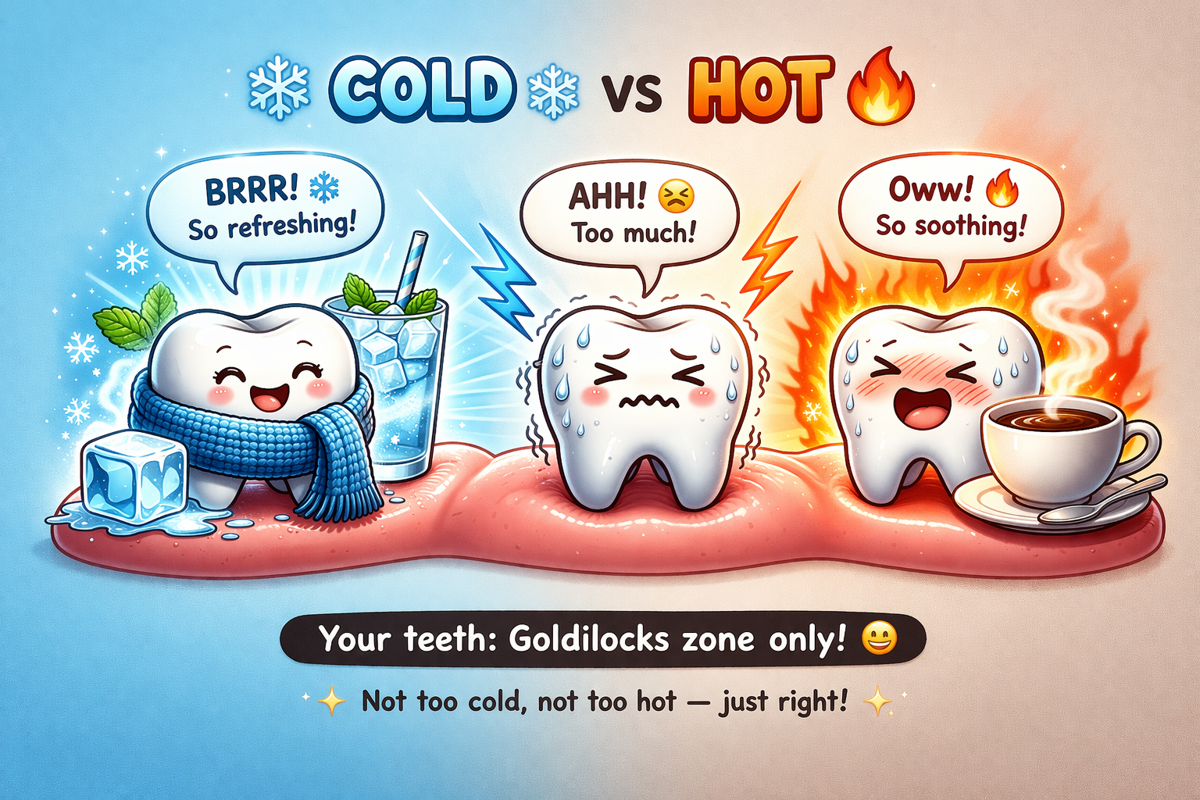
It usually starts with something small.
You take a sip of hot coffee in the morning, or a bite of something cold, and suddenly there is a sharp pain in your tooth. It disappears quickly, but it leaves you wondering what just happened.
At first, most people ignore it. Maybe it was just that one time. But then it happens again. And again. Slowly, without realizing it, you begin to avoid certain foods and drinks. Ice cream is no longer enjoyable. Cold water feels uncomfortable. Even brushing your teeth might trigger that same sharp feeling.
This is how tooth sensitivity quietly becomes part of daily life, and it is one of the most common concerns patients mention when visiting a dentist.
Table of Contents
What is causing this kind of pain
To understand why this happens, it helps to know a little about how teeth are built.
Each tooth has a strong outer layer called enamel. Underneath that is a softer layer called dentin. Inside the dentin are tiny channels that lead directly to the nerve of the tooth.
When enamel is healthy and gums are in place, those channels are protected. But when that protection weakens, hot or cold temperatures can reach the nerve much faster. That is what causes the sudden, sharp pain people feel.
From a dentist’s perspective, there are a few common reasons this protection starts to break down.
Brushing too hard is one of the biggest causes. Many people think brushing harder means cleaner teeth, but it can slowly wear away enamel over time. Using a hard toothbrush can make this worse.
Acidic foods and drinks also play a role. Things like soda, citrus fruits, energy drinks, and even some healthy options can gradually soften enamel if they are consumed often.
Another common cause a dentist often sees is gum recession. As gums slowly pull back, they expose the root of the tooth. This area does not have the same protection as enamel, which makes it much more sensitive.
Sometimes the issue can be related to small cracks in the teeth, worn fillings, or early tooth decay. These problems may not always be visible, but they can still trigger sensitivity.
Why you should not ignore sensitive teeth
Because the pain comes and goes quickly, many people assume it is not serious. But sensitivity is usually a sign that something has changed in your oral health.
A dentist will often point out that ignoring sensitivity allows the underlying issue to continue developing. What starts as mild discomfort can turn into more noticeable pain or lead to more complex dental problems over time.
Listening to these early signs can help prevent bigger treatments later.
What are the solutions according to a dentist
The good news is that tooth sensitivity is very manageable once you understand what is causing it, and a dentist will usually recommend starting with simple, effective changes.
Begin with your daily routine. Use a soft bristle toothbrush and brush gently. This protects your enamel instead of damaging it. Many patients see improvement just by adjusting how they brush.
Using toothpaste designed for sensitive teeth is another important step. A dentist will often recommend these because they help block the pathways that lead to the nerve, reducing that sharp pain over time. Consistency is important, and results typically improve within a few weeks.
Your diet also plays a major role. Reducing frequent exposure to acidic foods and drinks helps protect enamel. A dentist may also suggest rinsing your mouth with water after consuming acidic items to limit their effect.
If you grind your teeth, especially at night, it is important to address it. A dentist can identify signs of grinding and recommend protective solutions to prevent further enamel wear.
When sensitivity is related to gum recession, improving gum health becomes essential. Regular cleanings and proper home care can help maintain healthier gums and reduce exposure of sensitive areas.
If the sensitivity continues or becomes stronger, visiting a dentist is the next step. Professional treatments may include fluoride applications, protective coatings, or addressing underlying issues such as decay or worn restorations.
A small problem that deserves attention
Tooth sensitivity may seem like a minor issue, but it is often your body’s way of signaling that something needs attention.
Those quick flashes of pain are not random. They are signals your dentist takes seriously.
Taking action early can help you protect your teeth, avoid more complex procedures, and return to enjoying everyday moments without discomfort.
If your teeth hurt when you eat or drink something hot or cold, it is not something to ignore. It is something worth understanding and addressing with the help of a dentist before it becomes something more serious.
